
Engineering · July 10, 2026 · 5 min read
A premium LED chip is the floor, not the ceiling
Buyers ask which LED a screen uses. The better question is what the manufacturer does with it, because the same genuine emitter can deliver ten years of broadcast-grade colour or fail in three, depending entirely on the build.
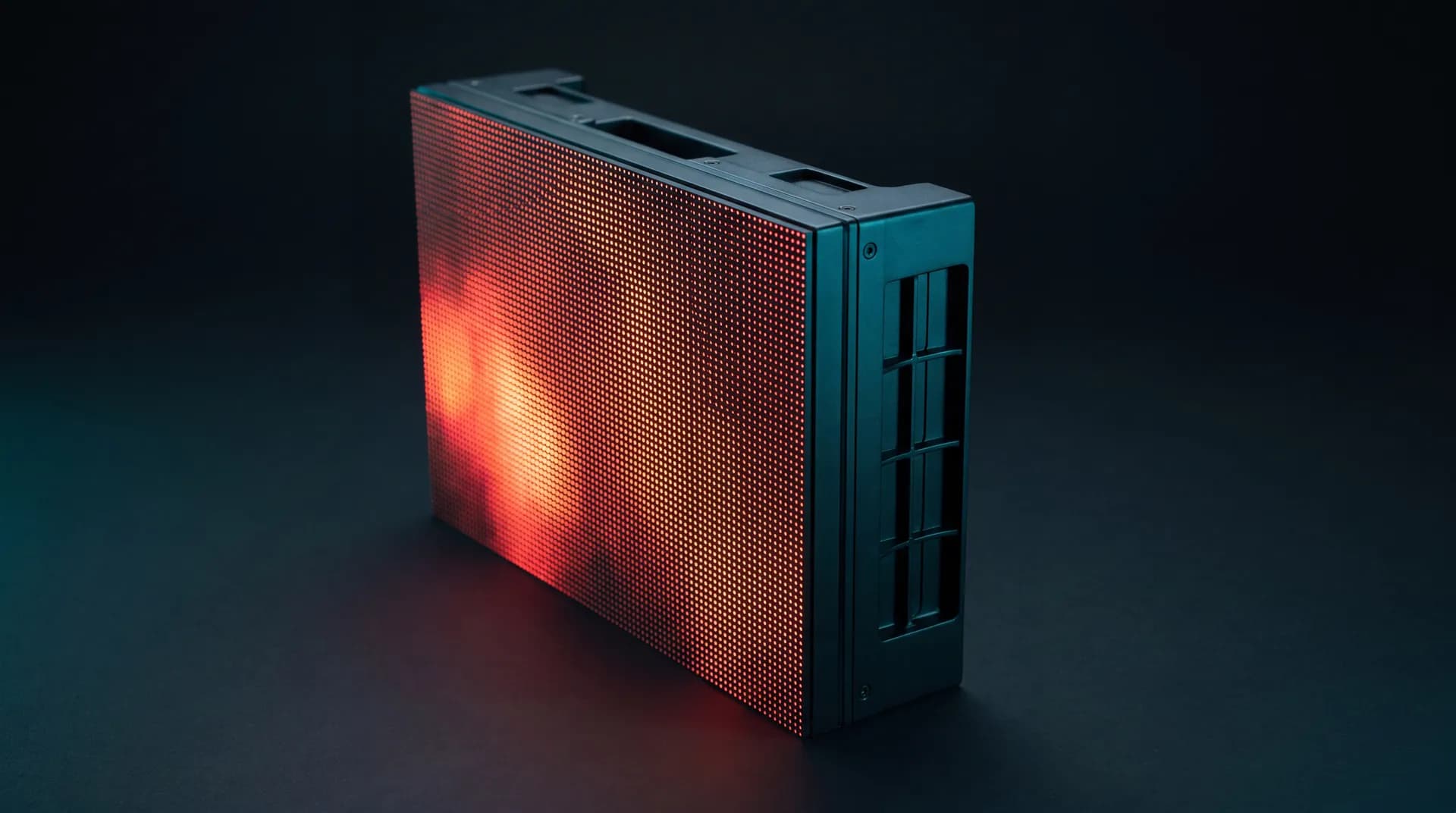
The LED is the most-discussed line on a display specification, and rightly so. A genuine, premium emitter is the right foundation. But a chip is a component, not a display. What happens between the reel of LEDs and the finished panel is where field reliability is actually won or lost, and almost none of it appears in a headline spec.
Binning beyond the factory bins
Emitters arrive pre-sorted into brightness and colour bins. A disciplined manufacturer sub-bins tighter than the factory does, then verifies colour and brightness at the module level rather than trusting a panel-wide average. That is the difference between a large wall that reads as one continuous surface and one that resolves, in daylight, into a patchwork of slightly mismatched tiles.
Burn-in is where bad LEDs reveal themselves
Electronics that are going to fail early tend to fail very early. A multi-stage burn-in — running modules before brightness verification, cycling them through repeated power stress, and pulling the weak units at several checkpoints — forces those infant-mortality failures to happen in the factory instead of on a tower two years later. It is slow and unglamorous, and it is the single biggest lever on year-three reliability.
The parts you never see
A 16-bit PWM driver IC for smooth low-end greyscale; sealed, IP-rated connectors; aluminium extrusion sized for heat; the right cable gauge; conformal coating on the boards. None of these reach the headline spec, yet each is a failure path if it is under-specified. The chip is the foundation: the enclosure, control electronics and thermal path are what keep it alive outdoors.
The LED is the foundation. Binning, burn-in, sealing and calibration are what turn a good emitter into a display that still looks specified a decade later.
So when you specify, ask past the chip. A genuine premium LED is table stakes: assume every serious bidder can name one. The engineering discipline wrapped around it is the actual product, and it is the part worth interrogating.
Bring it to your site
Have a project in mind?
Our team turns these principles into a scoped, specified system for your building.
More from Signal
Market · July 12, 2026
The operator’s screen: what North America’s DOOH market demands
North America is the world’s largest, most mature out-of-home market, and a distinctly operator-driven one. When a display is contracted advertising inventory sold by the second, the hardware spec starts to read like a financial document.
Design · July 12, 2026
What the Gulf is teaching the world about media façades
Nowhere has turned buildings into screens faster than the UAE and Saudi Arabia. The region’s landmark façades are a live lesson in what architectural LED actually has to solve: extreme heat, the transparency trade-off, and a skyline treated as a national asset.