
Engineering · June 11, 2026 · 5 min read
How bright is bright enough? The truth about nits
Outdoor LED is sold on brightness, but the highest nit count on the page is not the goal. Legibility, glare and the electricity bill all live in the same number, and the smart spec is about control, not maximum output.
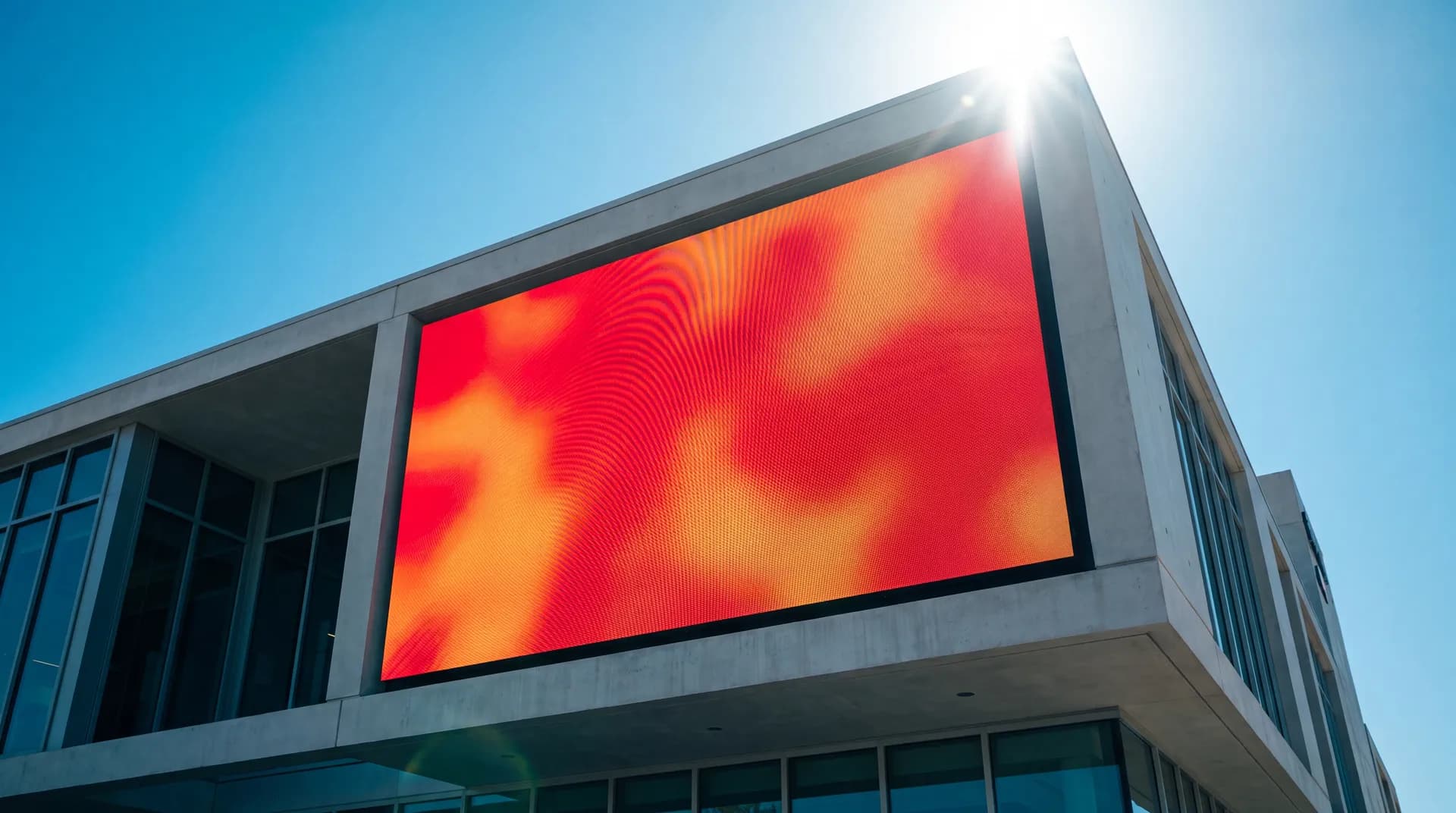
A nit is a unit of luminance (one candela per square metre), and it is the headline figure on every outdoor LED datasheet. The instinct is to chase the biggest one. A screen that has to compete with direct sunlight needs to be bright, and thousands of nits is genuinely what it takes to stay legible at midday. But brightness is a tool, not a trophy, and treating it as a trophy causes three problems at once.
The case against maximum brightness
First, glare. A screen running at full output after dark is not impressive. It is painful, it washes out its own content, and in many jurisdictions it breaches light-pollution limits that municipalities are tightening every year. Second, power and heat: luminance and power draw move together, so a screen pinned at maximum burns more electricity and runs hotter, which shortens the life of the very LEDs you paid a premium for. Third, longevity: LEDs dim slowly over their operating life, and driving them hard accelerates that decline.
The right question is not "how bright can it go?" but "can it hold the brightness it needs, and dim itself intelligently when it doesn't?"
Automatic dimming is the real feature
A well-engineered outdoor display carries an ambient-light sensor and dims in step with the sky: full force against noon sun, a fraction of that at dusk, lower still at midnight. Done well, the screen is always exactly as bright as it needs to be to stay legible and no brighter. That single behaviour protects legibility, controls the power bill, respects the neighbours and extends the panel's working life, which is why it matters more than the peak figure the sensor is dimming down from.
So read the datasheet twice. The peak nit figure tells you whether the screen can survive its worst-case sky. The dimming range, the sensor, and the uniformity of brightness across the whole surface tell you whether it will look good, cost little to run, and still be bright in ten years. The first number sells the screen. The rest of them are the ones that keep it looking specified on the day the warranty ends.
Bring it to your site
Have a project in mind?
Our team turns these principles into a scoped, specified system for your building.
More from Signal
Market · July 12, 2026
The operator’s screen: what North America’s DOOH market demands
North America is the world’s largest, most mature out-of-home market, and a distinctly operator-driven one. When a display is contracted advertising inventory sold by the second, the hardware spec starts to read like a financial document.
Design · July 12, 2026
What the Gulf is teaching the world about media façades
Nowhere has turned buildings into screens faster than the UAE and Saudi Arabia. The region’s landmark façades are a live lesson in what architectural LED actually has to solve: extreme heat, the transparency trade-off, and a skyline treated as a national asset.